
Abstracts of the 22nd Meeting of the Interuniversity Institute of Myology
Vol. 36 No. s1 (2026): Abstract book of the Padua Days on Muscle and Mobility Medicine 2026
https://doi.org/10.4081/ejtm.2026.15093

Abstract 094 | The efficacy of magnetic stimulation in patients with coxarthrosis

Nikolay V. Mozolev, Tatiana V. Konchugova, Tatiana V. Apkhanova | “National Medical Research Center for Rehabilitation and Balneology" of the Ministry of Health of the Russian Federation, Moscow, Russia.

Publisher's note
All claims expressed in this article are solely those of the authors and do not necessarily represent those of their affiliated organizations, or those of the publisher, the editors and the reviewers. Any product that may be evaluated in this article or claim that may be made by its manufacturer is not guaranteed or endorsed by the publisher.
Received: 2 March 2026
Published: 2 March 2026
95
Views
44
Downloads

Authors

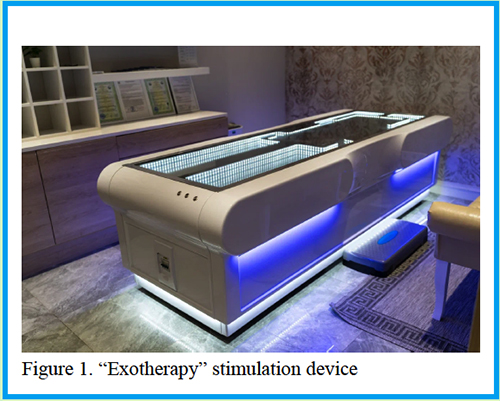
Osteoarthritis is a degenerative joint disease characterized by the progressive breakdown of articular cartilage, deformation of the joint surfaces, and consequent loss of joint function. Recent studies indicate that it affects 15-20% of the global population, with an incidence rate of up to 8.2 per 100,000 people. Numerous conservative treatment modalities exist for osteoarthritis, including various physiotherapeutic methods. One of the most promising techniques is the application of medium-intensity magnetic stimulation within a range of 100 to 700 mT. Our aim was to study the effect of a comprehensive rehabilitation program utilizing medium-intensity magnetic stimulation on muscle strength levels in patients with coxarthrosis. A pilot study included 40 patients with coxarthrosis (CA). The mean age of the participants was 56.12 ± 4.9 years, and the mean disease duration was 8.67 ± 1.14 years. The patients were divided into two groups. The comparison group (Group 1, n=20) received standard therapy, which consisted of group therapeutic exercises, laser therapy applied to the hip joint area, and electrical stimulation of the thigh muscles. The main study group (Group 2, n=20) received the standard treatment supplemented with magnetic stimulation procedures using the "Exotherapy" apparatus. Muscle strength parameters were evaluated for all patients. The average force (in Newtons, N) of the hip flexor and extensor muscles, as well as total work and speed characteristics, were measured using the "CON-TREX" robotic biomechanical diagnostic system with biofeedback, manufactured by Physiomed, Germany. Following a course of 10 medical interventions, patients in the main group demonstrated more significant positive dynamics on the VAS scale and an increase in the range of motion of the hip joint. According to isokinetic dynamometry data, patients in the main group showed a statistically significant positive trend in the values of maximum lower limb extension, maximum extension strength, average extension strength, average strength over 0.20 seconds, and peak torque (p<0.05). In the comparison group, only an improvement in the indicators of average extension strength and average strength over 0.20 seconds was observed, indicating the lower effectiveness of the standard rehabilitation course. No reliable positive dynamics in other strength indicators of the lower limb muscles were noted. Thus, supplementing the standard rehabilitation program for patients with CA with the magnetic stimulation technique makes it possible to reliably improve the condition of the lower limb muscles, which is of great importance in this pathology.

Abs094.jpg

Downloads

Download data is not yet available.

1. Xu Y, Wang Q, Wang XX, Xiang XN, Peng JL, He CQ, He HC. The Effect of Different Frequencies of Pulsed Electromagnetic Fields on Cartilage Repair of Adipose Mesenchymal Stem Cell-Derived Exosomes in Osteoarthritis. Cartilage. 2022;13(4):200-212. doi: 10.1177/19476035221137726.

2. Iannitti T, Fistetto G, Esposito A, Rottigni V, Palmieri B. Pulsed electromagnetic field therapy for management of osteoarthritis-related pain, stiffness and physical function: clinical experience in the elderly. Clin Interv Aging. 2013;8:1289-1293. doi: 10.2147/CIA.S35926.

3. Kovács C, Bozsik Á, Pecze M, Borbély I, Fogarasi A, Kovács L, Tefner IK, Bender T. Effects of sulfur bath on hip osteoarthritis: a randomized, controlled, single-blind, follow-up trial: a pilot study. Int J Biometeorol. 2016;60(11):1675-1680. doi: 10.1007/s00484-016-1158-3.

How to Cite


1.
Mozolev NV. Abstract 094 | The efficacy of magnetic stimulation in patients with coxarthrosis: Nikolay V. Mozolev, Tatiana V. Konchugova, Tatiana V. Apkhanova | “National Medical Research Center for Rehabilitation and Balneology" of the Ministry of Health of the Russian Federation, Moscow, Russia. Eur J Transl Myol [Internet]. 2026 Mar. 2 [cited 2026 Apr. 22];36(s1). Available from: https://www.pagepressjournals.org/bam/article/view/15093