

 https://doi.org/10.4081/ejtm.2026.15079
Abstract 080 | Assessment of motor disorders dynamics in the early stages of parkinson's disease
Kirill V. Terentev 1, Rinat R. Bogdanov 1, Andrey A. Lobanov 2, Sergey V. Andronov 2 | 1National Medical and Surgical Center named after N.I. Pirogov, Moscow, Russia; 2Quintessence Clinic, Moscow, Russia.
All claims expressed in this article are solely those of the authors and do not necessarily represent those of their affiliated organizations, or those of the publisher, the editors and the reviewers. Any product that may be evaluated in this article or claim that may be made by its manufacturer is not guaranteed or endorsed by the publisher.
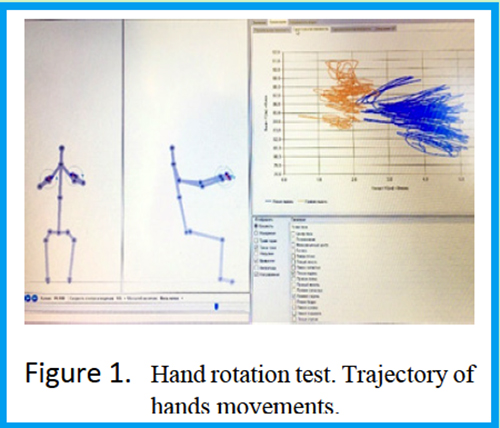
Downloads
1. Beitz JM. Parkinson's disease: a review. Front Biosci (Schol Ed). 2014 Jan 1;6(1):65-74. doi: 10.2741/s415. PMID: 24389262. DOI: https://doi.org/10.2741/S415
2. Tysnes OB, Storstein A. Epidemiology of Parkinson's disease. J Neural Transm (Vienna). 2017 Aug;124(8):901-905. doi: 10.1007/s00702-017-1686-y. Epub 2017 Feb 1. PMID: 28150045. DOI: https://doi.org/10.1007/s00702-017-1686-y
3. Schapira AHV, Chaudhuri KR, Jenner P. Non-motor features of Parkinson disease. Nat Rev Neurosci. 2017 Jul;18(7):435-450. doi: 10.1038/nrn.2017.62. Epub 2017 Jun 8. Erratum in: Nat Rev Neurosci. 2017 Aug;18(8):509. PMID: 28592904. DOI: https://doi.org/10.1038/nrn.2017.62
4. Hustad E, Aasly JO. Clinical and Imaging Markers of Prodromal Parkinson's Disease. Front Neurol. 2020 May 8;11:395. doi: 10.3389/fneur.2020.00395. PMID: 32457695; PMCID: PMC7225301. DOI: https://doi.org/10.3389/fneur.2020.00395
How to Cite

This work is licensed under a Creative Commons Attribution-NonCommercial 4.0 International License.
PAGEPress has chosen to apply the Creative Commons Attribution NonCommercial 4.0 International License (CC BY-NC 4.0) to all manuscripts to be published.