

 https://doi.org/10.4081/ejtm.2026.15029
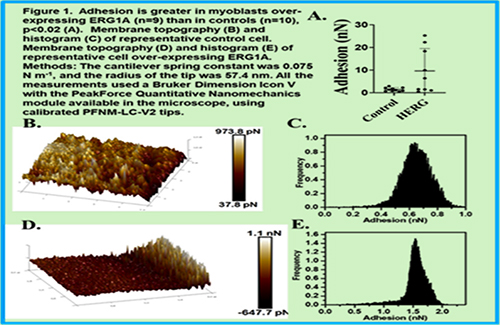
Abstract 030 | Expression of the ERG1A potassium channel affects nanoscale membrane characteristics of cultured skeletal muscle cells
Amber L. Pond 1, Annie Yojaira Vargas Lizarazo 2, Judith K. Davie 1, Punit Kohli 2 | 1Department of Basic Medical Sciences, School of Medicine, Southern Illinois University; 2School of Chemical and Biomolecular Sciences, Southern Illinois University Carbondale, Illinois, USA.
All claims expressed in this article are solely those of the authors and do not necessarily represent those of their affiliated organizations, or those of the publisher, the editors and the reviewers. Any product that may be evaluated in this article or claim that may be made by its manufacturer is not guaranteed or endorsed by the publisher.
Downloads
1. Zarrabi A, Perrin D, Kavoosi M, Sommer M, Sezen S, Mehrbod P, Bhushan B, Machaj F, Rosik J, Kawalec P, Afifi S, Bolandi SM, Koleini P, Taheri M, Madrakian T, Łos MJ , Lindsey B, Cakir N, Zarepour A, Hushmandi K, Fallah A, Koc B, Khosravi A, Ahmadi M, Logue S, Orive G, Pecic S, Gordon JW, Ghavami S. Rhabdomyosarcoma: Current therapy, challenges, and future approaches to treatment strategies. Cancers 2023;15:5269.
2. National Cancer Institute. 2020. Childhood Rhabdomyosarcoma Treatment (PDQ) – Health Professional Version. Accessed 11/17/2024. [https://www.cancer.gov/types/soft-tissue-sarcoma/hp/rhabdomyosarcoma-treatment-pdq#_1]. 3. Ries LAG, Smith MA, Gurney LG, Linet M, Tamran T, Young JL, Bunin GR. Cancer incidence and survival among children and adolescents: United States SEER Program 1975-1999. National Cancer Institute, SEER Program NIH Pub. No. 99-4649(1999). NIH Pub. No. 99-4649.
4. Skapek SX, Ferrari A, Gupta A, Lupo PJ, Butler E, Shipley J, Barr FG, Hawkins DS. Rhabdomyosarcoma. Nat Rev Dis Primers 2020;5(1):1-8. doi:10.1038/s41572-018-0051-2.
5. Zampieri S, Sandri M, Cheatwood JL, Balaraman RP, Anderson LB, Cobb BA, Latour CD, Hockerman GH, Kern H, Sartori R, Ravara B, Merigliano S, Da Dalt G, Davie JK, Kohli P, Pond AL. The ERG1A K+ channel is more abundant in Rectus abdominis muscle from cancer patients than in that from healthy humans. Diagnostics. 2021;11(10):1879. doi.org/10.3390/diagnostics11101879.
6. He S, Moutaoufik MT, Islam S, Persad A, Wu Adam, Aly KA, Fonge H, Babu M, Cayabyab FS. ERG1A channel and cancer: A mechanistic review of carcinogenic processes and therapeutic potential. BBA Reviews on Cancer. 2020;1873:188355.
7. Cross SE, Yu-Sheng J, Rao J, Gimzewski JK. Nanomechanical analyses of cells from cancer patients. Nature Nanotechnology 2007;2(12):780-3. doi: 10.1038/nnano.2007.388.
8. Massey A, Stewart J, Smith C, Parvini C, McCormick M, Do K, Cartagena-Rivera AX. Mechanical properties of human tumour tissues and their implications for cancer development. Nat Rev Phys. 2024;6(4):269-282. doi:10.1038/s42254-024-00707-2.
9. Byun S, Son S, Amodei D, Cermak N, Shaw J, Kang JH, Hecht VC, Winslow MM, Jacks T, Mallick P, Manalis SR. Characterizing deformability and surface friction of cancer cells. PNAS. 2013;110(19):7580-7585. doi: 10.1073/pnas.12188061/-/DCSupplemental.
10. Mierke CT. The matrix environmental and cell mechanical properties regulate cell migration and contribute to the invasive phenotype of cancer cells. Report Progress Physics 2019;82:1-74.
How to Cite

This work is licensed under a Creative Commons Attribution-NonCommercial 4.0 International License.
PAGEPress has chosen to apply the Creative Commons Attribution NonCommercial 4.0 International License (CC BY-NC 4.0) to all manuscripts to be published.