Abstracts of the 22nd Meeting of the Interuniversity Institute of Myology
Vol. 36 No. s1 (2026): Abstract book of the Padua Days on Muscle and Mobility Medicine 2026
https://doi.org/10.4081/ejtm.2026.15008

Abstract 009 | Lecture: FES in mice, rats and men: adaptation and recovery in aging rodent muscle

Jonathan Jarvis 1, Jack Edmondson 1, Hazel Sutherland 1, Mark Viggars 2 | 1School of Sport and Exercise Science, Liverpool John Moores University, UK; 2Department of Physiology & Aging – University of Florida, College of Medicine USA.

Publisher's note
All claims expressed in this article are solely those of the authors and do not necessarily represent those of their affiliated organizations, or those of the publisher, the editors and the reviewers. Any product that may be evaluated in this article or claim that may be made by its manufacturer is not guaranteed or endorsed by the publisher.
Received: 2 March 2026
Published: 2 March 2026
88
Views
36
Downloads

Authors

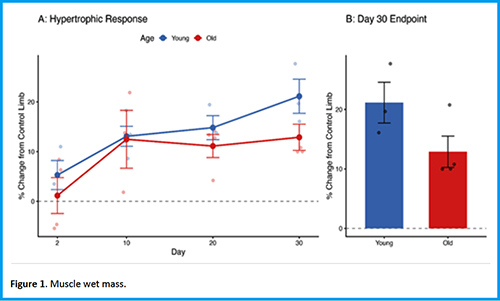
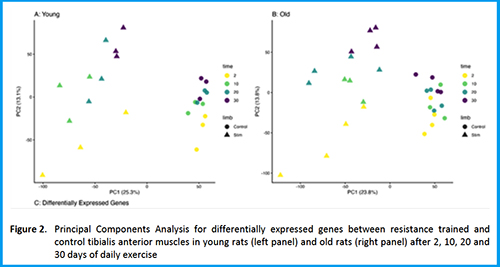
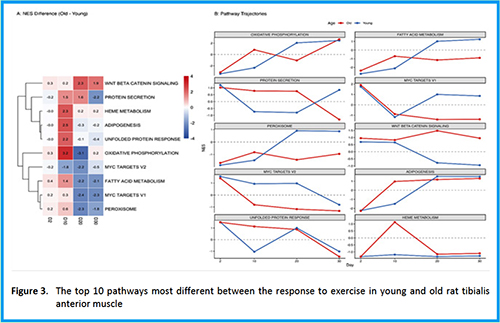
The change with age in the response of muscle to exercise is an important research area. The loss of muscle mass with age is associated with reduced neural activity or efficiency of motor end plates, reduced accessibility of nutrients to the muscles, decreased sensitivity of the protein synthetic machinery to an exercise or nutritional stimulus, and decreased ability to absorb and repair biochemical and mechanical insults of overload, such as inflammation, oxidative stress and loss of proteostasis. We have used experimental models to test the response of muscle from rodent and human and old and young subjects to changes in activity representing disuse or training [1-4]. These papers contain publicly available genome-wide transcriptomic data from young and old Fischer344 rats (an accelerated ageing model), the F344/Brown Norway cross that is used in most of the ageing research funded by the NIH in the US, Sprague Dawley rats [5], and C57BL/6j mice. Thus, comparisons of expression within informative gene sets generated from each dataset can begin to be made. Useful work has already been done to show that both common and divergent (or species specific) changes are important in ageing and in the response of different species to the challenge of exercise [4, 5] We have measured the time course of the response of muscle to training over the period of 3 to 4 weeks. This allows enough time to recognize changes within muscle that represent the homeostatic adaptation to a new physiological challenge, or the removal of that challenge. Analysis of samples from a single time point in a program of training may mask the differences between experimental groups. We have established a model of resistance training using daily sessions of resisted contractions in rats and mice that causes a 15% increase in wet mass of the tibialis anterior muscle in rat, but not in mouse, over a period of 30 days. We have focused on changes in the transcriptome and proteome [3] that are measured in muscle taken one hour after the last exercise bout, harvesting from individual subjects after 2, 10, 20 and 30 days of daily training. In the adult rat the acute response adapts over a period of three or four weeks so that the same stimulus causing rapid growth in the first two weeks of daily training no longer causes increase in muscle mass after 4 weeks. Some of the acute transcriptional responses following the exercise bout can still be noted after this period of adaptation, but many others show a much lower responsiveness after adaptation [2]. We have repeated these experiments in old rats (24 months). The amount of growth is only half of that achieved in adult, approximately 8% rather than 15% (Figure 1). The PCA plots of the transcriptomic data (Figure 2) are remarkably similar in young and old giving confidence that the experimental intervention was comparable. However, when we compare the transcriptomes with algorithms that interrogate the data to search for those genes that behave most differently in the two datasets, we can split the age cohorts by the expression levels in the acute exercise response of only about 25 genes across the timecourse of 0-30 days. These include a number of genes involved in the stress response that are more highly expressed in old than young muscle, and a group of genes including several involved in growth that are less highly expressed. Analytical methods: We focused first on differentially expressed genes in control and resistance-trained muscles across all training stages in adult muscle and then old muscle. We ran the sets of genes from the young and old muscles for analysis using the Hallmark method. Gene set enrichment analysis was performed using the fgsea R package, with genes ranked by t-statistic (not P-value) after limma-voom differential expression analysis and tested against the 50 Hallmark pathways from the MSig database. This first ranks the genes by significance of difference in expression between trained and control. We then calculated a normalised enrichment score for the 50 pathways included in the Hallmark protocol. The difference between this enrichment score between young and old was used to select the top 10 pathways most different between the response to exercise in young and old, and then to investigate time course of the normalized enrichment scores (Figure 3). We compared the differences in the expression of genes in these pathways between sedentary young and old muscle published by Shavakladze et al [5]. This comparison has the advantage that the young and old samples were run in the same sequencing batch. The results give us confidence that the comparisons of data from young and old muscle that were obtained in separate analyses from our laboratory are secure. We note that there are substantial differences between the expression of genes in these pathways in sedentary young and old muscle, and that the response with exercise can be interpreted as an attempt to compensate for these differences in control (unchallenged) muscle. For the top ten pathways, the initial response to resistance exercise in terms of gene expression is greater in old than in young muscle. It seems that the deficiency in the growth response must lie at a later stage than the stimulus to change RNA levels. We used the mixOmics R package to perform PLSDA-based analysis to find the genes that have the greatest influence in separating the responses in young and old muscle. The first group of genes contained 25 members and their combined expression was strongly separated between young and old across the time course from 2 to 30 days. Indeed almost all of the member genes showed a similar separation across the time course, showing that the difference was dependent more on age than on training status. This group of genes was also clearly separated between young and old in the Shavlakadze dataset [5]. There is divergence of opinion on the relationship between ribosomal gene expression and muscle growth. For example, Brown et al [6] emphasise the greater importance of translational efficiency over translational capacity in young growing muscle after resistance exercise in humans. There is new interest in the control of expression of the various ribosomal protein genes, previously thought to be regulated as a coordinated unit. We note in our data substantial differences in the coherence of ribosomal gene expression among the cytosolic ribosomal genes between young and old muscle after resistance exercise. These differences are not seen in the mitochondrial ribosomal genes. It is an attractive hypothesis that incoherent expression might limit ribosome assembly .We are investigating the hypothesis that muscle mounts a universal stress response to unaccustomed activity which may lead to muscle growth as an adaptive mechanism, if the protein synthetic machinery is operating successfully. We have noted slower or absent growth in several circumstances in which we can search for common aspects: these include old muscle, the edl muscle in comparison to the tibialis anterior muscle, and mouse muscles in comparison to rat muscle. One unifying factor may be the supply of energy for protein synthesis. We are annotating the metabolic challenge of a single bout of resistance exercise using nmr-based metabolomic analysis of exercised muscle from rat and mouse tibialis anterior. The metabolic response is substantially different in the two muscles. We have generated a new annotated library of standard metabolites to interrogate the muscle metabolome to look for differences in the ability of mouse and rat muscle to achieve protein synthesis sufficient for muscle hypertrophy.

Abs009Fig1.jpg

Abs009Fig2.jpg

Abs009Fig3.jpg

Downloads

Download data is not yet available.

1. Fisher AG, Seaborne RA, Hughes TM, Gutteridge A, Stewart C, Coulson JM. Sharples AP, Jarvis JC. Transcriptomic and epigenetic regulation of disuse atrophy and the return to activity in skeletal muscle. FASEB J. 2017 Dec;31(12):5268-5282. doi: 10.1096/fj.201700089RR. Epub 2017 Aug 17. PMID:28821632.

2. Viggars MR, Sutherland H, Lanmüller H, Schmoll M, Bijak M, Jarvis JC. Adaptation of the transcriptional response to resistance exercise over 4 weeks of daily training. FASEB J. 2023 Jan;37(1):e22686. doi: 10.1096/fj.202201418R. PMID: 36468768.

3. Stead CA, Hesketh SJ, Thomas ACQ, Viggars MR, Sutherland H, Jarvis JC, Burniston JG. Dynamic time course of muscle proteome adaptation to programmed resistance training in rats. Am J Physiol Cell Physiol. 2025 Dec 1;329(6):C1792-C1809. doi: 10.1152/ajpcell.00254.2025. Epub 2025 Oct 21. PMID: 41117415.

4. Viggars MR, Sutherland H, Cardozo CP, Jarvis JC. Conserved and species-specific transcriptional responses to daily programmed resistance exercise in rat and mouse. FASEB J. 2023 Dec;37(12):e23299. doi: 10.1096/fj.202301611R. PMID: 37994729.

5. Shavlakadze T, Xiong K, Mishra S, McEwen C, Gadi A, Wakai M, Salmon H, Stec MJ, Negron N, Ni M, Wei Y, Atwal GS, Bai Y, Glass DJ. Age-related gene expression signatures from limb skeletal muscles and the diaphragm in mice and rats reveal common and species-specific changes. Skelet Muscle. 2023 Jul 12;13(1):11. doi: 10.1186/s13395-023-00321-3. PMID: 37438807; PMCID: PMC10337157.

6. Brown A, Parise G, Thomas ACQ, Ng SY, McGlory C, Phillips SM, Kumbhare D, Joanisse S. Low baseline ribosome-related gene expression and resistance training-induced declines in ribosome-related gene expression are associated 2026 Pd3m Secretariate: Ugo Carraro – A-C M-C Foundation - Email: ugo.carraro@unipd.it - Ugo Carraro mobile: +39 338 1575745 – Barabara Ravara - A-C M-C Foundation - Email:barbara.ravara@unipd.it with skeletal muscle hypertrophy in young men and women. J Cell Physiol. 2024 Apr;239(4):e31182. doi: 10.1002/jcp.31182. Epub 2024 Jan 12. PMID: 38214457.

How to Cite


1.
Jarvis J. Abstract 009 | Lecture: FES in mice, rats and men: adaptation and recovery in aging rodent muscle: Jonathan Jarvis 1, Jack Edmondson 1, Hazel Sutherland 1, Mark Viggars 2 | 1School of Sport and Exercise Science, Liverpool John Moores University, UK; 2Department of Physiology & Aging – University of Florida, College of Medicine USA. Eur J Transl Myol [Internet]. 2026 Mar. 2 [cited 2026 Apr. 17];36(s1). Available from: https://www.pagepressjournals.org/bam/article/view/15008