Abstracts of the 22nd Meeting of the Interuniversity Institute of Myology
Vol. 36 No. s1 (2026): Abstract book of the Padua Days on Muscle and Mobility Medicine 2026
https://doi.org/10.4081/ejtm.2026.15003

Abstract 004 | Digital and synthetic twins to improve the evaluation of diseases

Damiano Coato 1|2, Gianmarco Dolino 1|2, Alice Berardo 2|4, Emanuele L. Carniel 2|3, Paolo Gargiulo 1|2 | 1Institute of Biomedical and Neural Engineering, Reykjavík University, Reykjavík, Iceland ; 2Department of Industrial Engineering, University of Padova, Padua, Italy; 3Centre for Mechanics of Biological Materials, University of Padova, Padua, Italy; 4Department of Civil Environmental and Architectural Engineering, University of Padova, Padua, Italy.

Publisher's note
All claims expressed in this article are solely those of the authors and do not necessarily represent those of their affiliated organizations, or those of the publisher, the editors and the reviewers. Any product that may be evaluated in this article or claim that may be made by its manufacturer is not guaranteed or endorsed by the publisher.
Received: 2 March 2026
Published: 2 March 2026
115
Views
43
Downloads

Authors

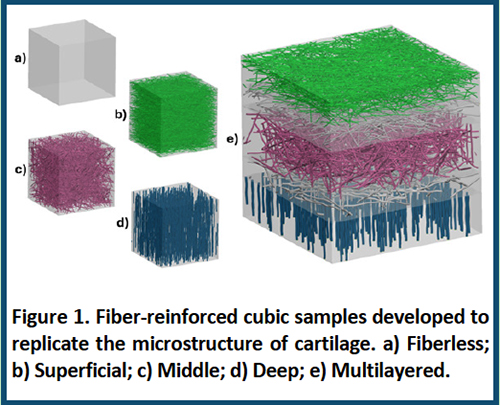
The concept of the digital twin has already transformed engineering and medicine by enabling virtual replicas of organs and tissues for simulation, diagnostics, and treatment planning [1]. Yet, many biomedical applications require physical counterparts that replicate not only the anatomy but also the mechanical behavior of living tissues [2]. To address this gap, we introduce the Synthetic Twin: a sustainable, physical analog of human tissue, fabricated via advanced 3D printing with tunable microstructure that reproduce native mechanical properties [3,4]. Unlike conventional phantoms, which depend exclusively on material composition, Synthetic Twins leverage microstructural engineering (e.g., fiber reinforcement, layering, porosity modulation) to replicate a wide spectrum of healthy and pathological conditions. As a proof-of-concept, we present the design and characterization of 3D printed fiber-reinforced cartilage phantoms, demonstrating how microstructural tuning enables anisotropic behavior that closely resembles native tissue. Using mechanical testing combined with Digital Image Correlation (DIC), we evaluated samples with single fiber orientations (superficial, middle, deep) as well as a novel multilayered construct mimicking the stratification of native cartilage. Results show that microstructural design governs stiffness and Poisson’s ratio in a depth-dependent manner, with multilayered constructs displaying the highest fidelity. This work demonstrates that Synthetic Twins can provide reproducible, customizable, and ethically sustainable alternatives to animal and cadaveric models, with applications in diagnostics, surgical training, and personalized healthcare.

Abs004.jpg

Downloads

Download data is not yet available.

1. J. Wu and V. H. Koelzer, “Towards generative digital twins in biomedical research,” Computational and Structural Biotechnology Journal, vol. 23, pp. 3481–3488, 2024. DOI: https://doi.org/10.1016/j.csbj.2024.09.030

2. J. Antons, M. Marascio, J. Nohava, R. Martin, L. Applegate, P. Bourban, and D. Pioletti, “Zone-dependent mechanical properties of human articular cartilage obtained by indentation measurements,” Journal of Materials Science: Materials in Medicine, vol. 29, no. 5, p. 57, 2018. DOI: https://doi.org/10.1007/s10856-018-6066-0

3. D. Coato, et al., "Synthetic 3D printed tibial plateau with gradient material properties for biomechanical accuracy." Frontiers in Bioengineering and Biotechnology 13 (2025): 1707380. DOI: https://doi.org/10.3389/fbioe.2025.1707380

4. G. Dolino, et al., “Designing a Synthetic 3D-Printed Knee Cartilage: FEA Model, Micro-Structure and Mechanical Characteristics”. Appl. Sci., 14, pp. 1-16, 2024. DOI: https://doi.org/10.3390/app14010331

How to Cite


1.
Coato D. Abstract 004 | Digital and synthetic twins to improve the evaluation of diseases: Damiano Coato 1|2, Gianmarco Dolino 1|2, Alice Berardo 2|4, Emanuele L. Carniel 2|3, Paolo Gargiulo 1|2 | 1Institute of Biomedical and Neural Engineering, Reykjavík University, Reykjavík, Iceland ; 2Department of Industrial Engineering, University of Padova, Padua, Italy; 3Centre for Mechanics of Biological Materials, University of Padova, Padua, Italy; 4Department of Civil Environmental and Architectural Engineering, University of Padova, Padua, Italy. Eur J Transl Myol [Internet]. 2026 Mar. 2 [cited 2026 Apr. 18];36(s1). Available from: https://www.pagepressjournals.org/bam/article/view/15003