 https://doi.org/10.4081/ecj.2026.15958
18 | How can simulations improve daily clinical practice in acute care settings? A cross sectional survey on critical care practitioners
All claims expressed in this article are solely those of the authors and do not necessarily represent those of their affiliated organizations, or those of the publisher, the editors and the reviewers. Any product that may be evaluated in this article or claim that may be made by its manufacturer is not guaranteed or endorsed by the publisher.
Background. Clinical simulation has become an essential educational strategy in critical care settings, promoting the development of technical and non-technical skills such as communication, leadership, and stress management. While its professional benefits are well documented, little is known about the impact that simulation-based training can have on education in critical care. This study aims to evaluate the perceived impact of simulation training on critical care healthcare professionals, focusing on professional competence and development of non-technical skills.
Methods. An observational cross-sectional study was conducted using a structured questionnaire consisting of 22 multiple-choice items, administered with Google Forms to attending physicians, medical residents, and nurses, working in various critical care services (intensive care units, emergency departments, pre-hospital emergency services). The survey included questions on the following domains:
The professional impact of technical and non-technical skills and the extent to which simulation can improve emergency/urgency management
The personal and emotional impact of simulation: how it improves stress management in critical situations and highlights the need for continuous training
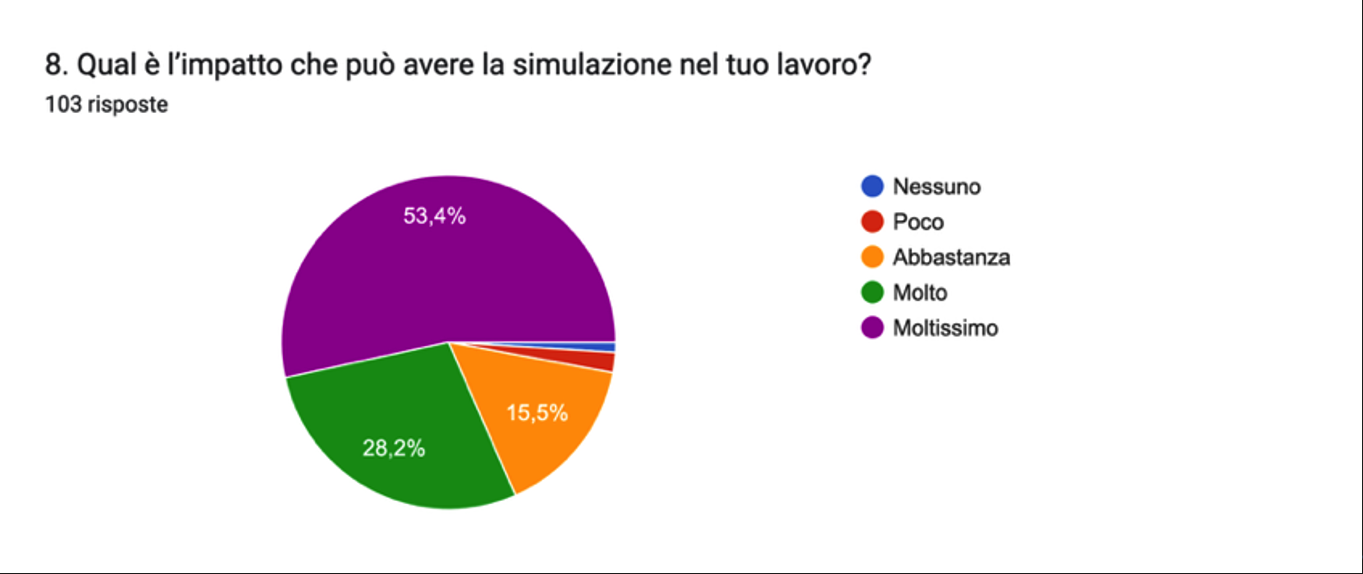
Results. This observational cross-sectional study included 103 critical care healthcare professionals (physicians, residents, and nurses). The vast majority of participants (81.6%) perceived the impact of simulation on their work as "High" to "Very High", with 53.4% choosing the maximum rating ("Very High") [Figure 1].
In line with the study's objective, the analysis confirmed a strongly perceived impact on skill improvement:
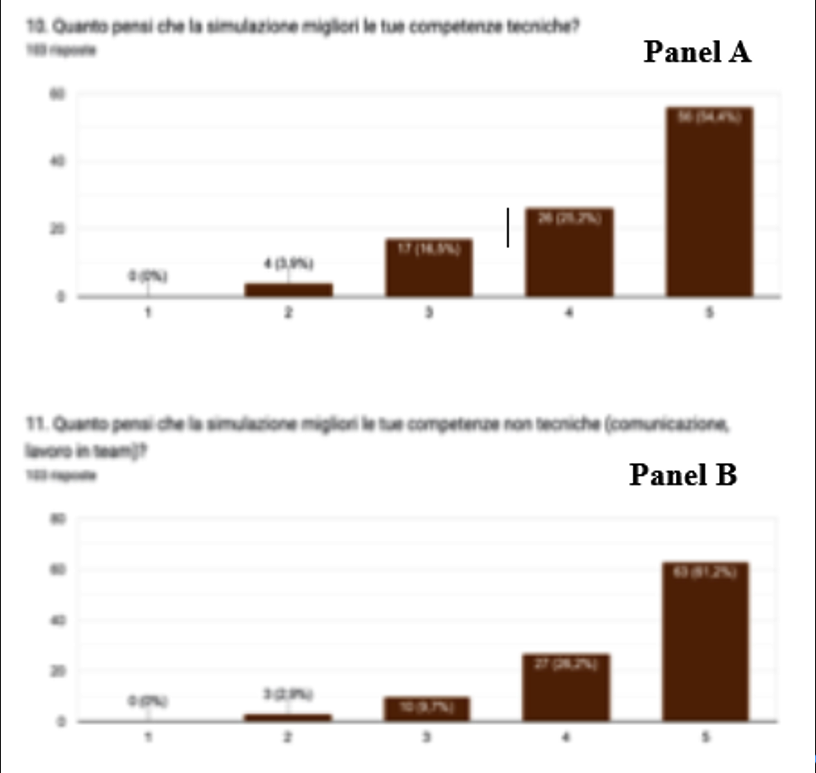
Technical Skills: 79.6% of participants rated the improvement of technical skills with a score of 4 or 5 out of 5 (54.4% maximum rating) [Figure 2A].
Non-Technical Skills: The effectiveness in improving non-technical skills (communication and teamwork) was perceived as even higher, with 87.4% assigning a score of 4 or 5 (61.2% maximum rating) [Figure 2B].
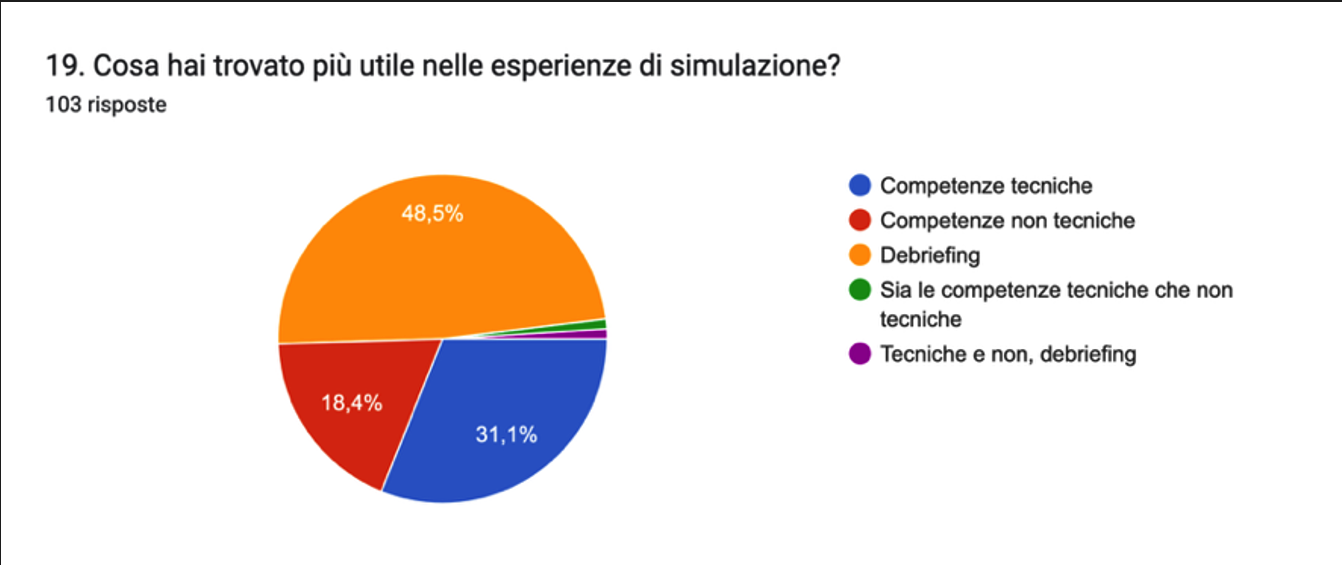
Finally, the most useful element in the simulation experiences was found to be the Debriefing, indicated by 48.5% of professionals, surpassing both technical skills alone (31.1%) and non-technical skills alone (18.4%) [Figure 3].
Conclusions. The findings underline how contemporary simulation activities have an extremely positive impact on critical care staff. This strongly perceived impact validates simulation as a central training strategy, essential for advancing professional competence and team effectiveness within the critical care environment.
Downloads
-
CRediT authorship contribution
Supporting Agencies
Data Availability Statement
How to Cite

This work is licensed under a Creative Commons Attribution-NonCommercial 4.0 International License.
PAGEPress has chosen to apply the Creative Commons Attribution NonCommercial 4.0 International License (CC BY-NC 4.0) to all manuscripts to be published.