 https://doi.org/10.4081/ecj.2026.15939
06 | Multiple pediatric polytrauma: emergency and urgenct management strategies
All claims expressed in this article are solely those of the authors and do not necessarily represent those of their affiliated organizations, or those of the publisher, the editors and the reviewers. Any product that may be evaluated in this article or claim that may be made by its manufacturer is not guaranteed or endorsed by the publisher.
Background. A rapid and effective working team in an emergency setting is crucial for optimizing patient outcomes. The presented case illustrates how collaboration and organization were decisive in a complex context: a pediatric mass casualty incident.
Case Presentation. Following a severe, high-velocity road traffic accident, six passengers – including four children aged between 2 and 12 years – were ejected from the vehicle, sustaining multiple injuries. The Central Operations Unit 118, responsible for coordination, directed the four children to the Modena Polyclinic, the provincial Pediatric Trauma Center Hub. The alert arrived during the evening shift change; the afternoon personnel made themselves available to stay, allowing for a prompt activation of the mass casualty protocol. The on-call anesthesiologist with the corresponding pediatric specialist, the Emergency Department (ED) pediatrician, and the radiologist were immediately alerted.
Upon arrival, the patients were rapidly triaged and admitted to the Shock Room, each assigned to a dedicated team consisting of one or two anesthesiologists-resuscitators, an ED physician, and an experienced nurse. Following handover with the 118 crews and re-assessment according to the Primary Survey, the radiologist performed an Extended Focused Assessment with Sonography for Trauma (E-FAST) on all patients. CT scans were planned based on clinical priority, with shared decisions among the teams and urgent reporting.
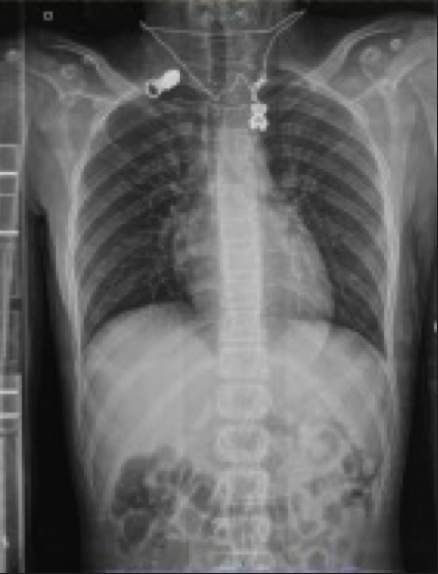
The extent of injury included four major head traumas, three of which were cranio-cervical; two associated with cerebral hemorrhage (SAH and subdural) and skull vault fracture. One patient presented with diffuse axonal injury, another with a C3 fracture. Two children also sustained thoracic (one with a sternal fracture and extensive pulmonary contusion) and minor long bone fractures.
The mean time spent in the ED for stabilization and primary assessments was 1 hour and 35 minutes, followed by rapid admission to the Intensive Care Unit for three of them. The timeliness of the intervention resulted in a favorable outcome for all four patients after a prolonged hospital stay.
Conclusions. Effective multidisciplinary teamwork, adequate leadership, and a clear division of roles represent the foundation of a trained and efficient Trauma Team, which is the cornerstone for optimizing outcomes in terms of survival, sequelae, and length of hospitalization.
Downloads
-
CRediT authorship contribution
Supporting Agencies
Data Availability Statement
How to Cite

This work is licensed under a Creative Commons Attribution-NonCommercial 4.0 International License.
PAGEPress has chosen to apply the Creative Commons Attribution NonCommercial 4.0 International License (CC BY-NC 4.0) to all manuscripts to be published.