
 https://doi.org/10.4081/jear.2021.9559
Genetic and phenotypic effects of hybridization in independently introduced populations of the invasive maize pest Diabrotica virgifera virgifera in Europe
All claims expressed in this article are solely those of the authors and do not necessarily represent those of their affiliated organizations, or those of the publisher, the editors and the reviewers. Any product that may be evaluated in this article or claim that may be made by its manufacturer is not guaranteed or endorsed by the publisher.
Published: 30 April 2021
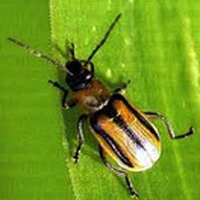
The North American western corn rootworm, Diabrotica virgifera virgifera LeConte (Coleoptera: Chrysomelidae) was introduced into Europe several times during the end of the 20th century. Outbreaks in north-western Italy (NW Italian) and central and south-eastern Europe (CSE European) have merged in 2008 and insects interbreed since then. This study compared the genetic diversity (multi-locus genotype analyses at 13 microsatellites markers) and ten phenotypic traits among the CSE European and NW Italian populations as well as their hybrid offspring. All insects were reared under standardised laboratory conditions. Neutral genetic polymorphism appeared moderate in parental and hybrid populations, compared to North American populations. Some increase in neutral genetic variability was detected in the hybrids` expected heterozygosity and allelic richness compared to parental populations when family structures were considered. In 70% of the assessed phenotypic traits, the population type (CSE European, NW Italian, hybrids) influenced a trait, but averages in hybrids never exceeded those in their parents. Population type did not influence fecundity or adult lifespan (reflecting fitness) and not the proportion of adults flying (reflecting dispersal capabilities). There was no evidence yet that hybridization influences variability of phenotypic traits. In conclusion, there are only few indications that hybrids between the two overlapping invading European populations may in the longer term, take advantage through higher neutral genetic diversity and subsequent phenotypic adaptability.
Downloads
ALLENDORF, F.W. & L.L. LUNDQUIST. 2003. Introduction: Population biology, evolution, and control of invasive species. Conservation Biology. 17:24-30. DOI: https://doi.org/10.1046/j.1523-1739.2003.02365.x
ANONYMOUS. 2020. Crop Protection Compendium. CAB Inaternational, Wallingford, UK.
BAKER, P. T. 1965. Multidisciplinary studies of human adaptability: Theoretical justification and method. In Weiner, J. (Ed.), International Biological 9 Programme: A guide to the Human adaptability proposals. Blackwell Scientific, Oxford and Edinburgh.
BARRETT, S.C.H. & J.R. KOHN. 1991. Genetic and evolutionary consequences of small population size in plants: implications for conservation. In Genetics and conservation of rare plants. D.A. Falk and K.E. Holsinger, editors. Oxford University Press, New York. 3-61.
BEGON, M., J.L. HARPER & C.R. TOWNSEND. 1990. Oekologie: Individuen, Populationen und Lebensgemeinschaften. In Oekologie: Individuen, Populationen und Lebensgemeinschaften. Blackwell. 650.
BENJAMINI, Y. & Y. HOCHBERG. 1995. Controlling the false discovery rate: a practical and powerful approach to multiple testing. Journal of the Royal Statistical Society. 57:289–300.
BERMOND, G., M. CIOSI, E. LOMBAERT, A. BLIN, M. BORIANI, L. FURLAN, S. TOEPFER & T. GUILLEMAUD. 2012. Secondary contact and admixture between independently invading populations of the western corn rootworm, Diabrotica virgifera virgifera in Europe. PLoS ONE. 7:e50129.
BERMOND, G, CAVIGLIASSO F MALLEZ S, SPENCER J & GUILLEMAUD T. 2014. No clear effect of admixture between two european invading outbreaks of Diabrotica virgifera virgifera in natura. PLoS ONE. 9. e106139.
BRANSON, T.F. 1976. Viability and hatching pattern of eggs of the western corn rootworm exposed to chill periods of different durations. Entomologia Experimentalis et Applicata. 19:77-81. DOI: https://doi.org/10.1111/j.1570-7458.1976.tb02583.x
BRANSON, T.F. & J.J. JACKSON. 1988. An improved diet for adult Diabrotica virgifera virgifera (Coleoptera: Chrysomelidae). Journal of the Kansas Entomological Society. 61:353-355.
BRANSON, T.F., J.J. JACKSON & G.R. SUTTER. 1988. Improved method for rearing Diabrotica virgifera virgifera (Coleoptera: Chrysomelidae). Journal of Economic Entomology. 81:410-414. DOI: https://doi.org/10.1093/jee/81.1.410
BRANSON, T.F. & R.D. JOHNSON. 1973. Adult western corn rootworm: oviposition, fecundity, and longevity in the laboratory. Journal of Economic Entomology. 66:417-418. DOI: https://doi.org/10.1093/jee/66.2.417
BRANSON, T.F. & J.L. KRYSAN. 1981. Feeding and oviposition behavior and life cycle strategies of Diabrotica: An evolutionary view with implications for pest management. Environmental entomology. 10:826-831. DOI: https://doi.org/10.1093/ee/10.6.826
BURNHAM, K. P. & ANDERSON, D. R. 2004. Multimodel Inference: Understanding AIC and BIC in Model Selection. Sociological Methods & Research, 33(2), 261–304. https://doi.org/10.1177/0049124104268644 DOI: https://doi.org/10.1177/0049124104268644
CAMPBELL, L.A. & L.J. MEINKE. 2010. Fitness of Diabrotica barberi, Diabrotica longicornis, and their hybrids (Coleoptera: Chrysomelidae). Annals of the Entomological Society of America. 103:925-935. DOI: https://doi.org/10.1603/AN10031
CIOSI, M., N.J. MILLER, K.S. KIM, R. GIORDANO, A. ESTOUP & T. GUILLEMAUD. 2008. Invasion of Europe by the western corn rootworm, Diabrotica virgifera virgifera: multiple transatlantic introductions with various reductions of genetic diversity. Molecular Ecology. 17:3614-3627. DOI: https://doi.org/10.1111/j.1365-294X.2008.03866.x
CIOSI, M., N.J. MILLER, S. TOEPFER, A. ESTOUP & T. GUILLEMAUD. 2011. Stratified dispersal and increasing genetic variation during the invasion of Central Europe by the western corn rootworm, Diabrotica virgifera virgifera. Evolutionary Applications. 4:54-70. DOI: https://doi.org/10.1111/j.1752-4571.2010.00133.x
DRAKE, J.M. 2006 Heterosis, the catapult effect and establishment success of a colonizing bird. Biology Letters, 2, 304– 307.
ELLSTRAND, N.C. & K.A. Schierenbeck. 2000. Hybridization as a stimulus for the evolution of invasiveness in plants? PNAS, Proceedings of the National Academy of Sciences of the United States of America. 97:7043 - 7050.
ESTOUP A., RAVIGNÉ V., HUFBAUER R., VITALIS R., GAUTIER M. & FACON B. 2016 Is There a Genetic paradox of biological invasion? Annual Review of Ecology, Evolution, and Systematics 47:51-72. DOI: 10.1146/annurev-ecolsys-121415-032116. DOI: https://doi.org/10.1146/annurev-ecolsys-121415-032116
FACON B, POINTIER JP, JARNE P, SARDA V & DAVID P. 2008. High genetic variance in life-history strategies within invasive populations by way of multiple introductions. Current Biology 18, 363-367.
FAGAN WF, LEWIS MA, NEUBERT MG & DRIESSCHE, PVD. (2002) Invasion theory and biological control. Ecology Letters, 5: 148-157 DOI: https://doi.org/10.1046/j.1461-0248.2002.0_285.x
FOX, C.W., AND K.L. & SCHEIBLY. 2006. Variation in inbreeding depression among populations of the seed beetle, stator limbatus. Department of entomology. 121:137-144. DOI: https://doi.org/10.1111/j.1570-8703.2006.00465.x
FRANKHAM, R. 2005. Resolving the genetical paradox in invasive species. Heredity. 94.
FURLAN, L. 2008. Update on the presence of western corn rootworm in Italy in 2007. Aggiornamento sulla presenza di diabrotica in Italia nel 2007. Informatore Agrario. 64:44-46.
FURLAN, L., M. VETTORAZZO & C. FRAUSIN. 2002. Diabrotica virgifera virgifera: what has been done and what will be done in Italy? Acta Phytopathologica et Entomologica Hungarica. 37:169-173.
GOUDET J. 2001. FSTAT, a program to estimate and test gene diversities and fixation indices (version 2.9.3). Updated from Goudet (1995).
GRAY, M.E., T.W. SAPPINGTON, N.J. MILLER, J. MOESER & M.O. BOHN. 2009. Adaptation and invasiveness of western corn rootworm: intensifying research on a worsening pest. Annual Review of Entomology. 54:303-321. DOI: https://doi.org/10.1146/annurev.ento.54.110807.090434
GUILLEMAUD TH, CIOSI M, LOMBAERT E & ESTOUP A (2011) Biological invasions in agricultural settings: Insights from evolutionary biology and population genetics. Comptes Rendus Biologies, 334 (3), 237-246. DOI: https://doi.org/10.1016/j.crvi.2010.12.008
HAMMACK, L. & B.W. FRENCH. 2007. Sexual dimorphism of basitarsi in pest species of Diabrotica and Cerotoma (Coleoptera : Chrysomelidae). Annals of the Entomological Society of America. 100:59-63. DOI: https://doi.org/10.1603/0013-8746(2007)100[59:SDOBIP]2.0.CO;2
HILL, R.E. 1975. Mating, oviposition patterns, fecundity, and longevity of the western corn rootworm. Journal of Economic Entomology. 68:311-315. DOI: https://doi.org/10.1093/jee/68.3.311
JOHNSTON, J.A., L.A. DONOVAN & M.L. ARNOLD. 2004. Novel phenotypes among early generation hybrids of two Louisana iris species: flooding experiments. Journal of Ecology. 92:967-976. DOI: https://doi.org/10.1111/j.1365-2745.2004.00939.x
KIM, K.S. & T.W. SAPPINGTON. 2005. Polymorphic microsatellite loci from the western corn rootworm (Insecta: Coleoptera: Chrysomelidae) and cross-amplification with other Diabrotica spp. Mol. Ecol. Notes. 5:115-117. DOI: https://doi.org/10.1111/j.1471-8286.2004.00853.x
KIM, K.S., U. STOLZ, N. MILLER, E. WAITS, T. GUILLEMAUD, D. SUMMERFORD & T.W. SAPPINGTON. 2007. Genetic diversity in laboratory colonies of western corn rootworm (Coleoptera: Chrysomelidae), including a non-diapause colony. Journal of environmental entomology. in press.
KRYSAN, J.L. 1972. Embryonic stages of Diabrotica virgifera (Coleoptera: Chrysomelidae) at diapause. Annals of the Entomological Society of America. 65:768-769. DOI: https://doi.org/10.1093/aesa/65.3.768
KRYSAN, J.L. 1982. Diapause in the Nearctic species of the Diabrotica virgifera group: Evidence for tropical origin and temperate adaptations. Annals of the entomological society of America. 75:136-142. DOI: https://doi.org/10.1093/aesa/75.2.136
KRYSAN, J.L. & T.A. MILLER. 1986. Methods for study of pest Diabrotica. Springer, New York. 260 pp.
KRYSAN, J.L. & R.F. SMITH. 1987. Systematics of the virgifera species group of Diabrotica (Coleoptera: Chrysomelidae: Galerucinae). Entomography. 5:375-484.
KUHAR, T.P. & R.R. YOUNGMAN. 1995. Sex ratio and sexual dimorphism in western corn rootworm (Coleoptera: Chrysomelidae) adults on yellow sticky traps in corn. Environmental entomology. 24:1408-1413. DOI: https://doi.org/10.1093/ee/24.6.1408
KUHLMANN, U., S. TOEPFER & F. ZHANG. 2005. Is classical biological control against western corn rootworm in Europe a potential sustainable management strategy? In Western corn rootworm: ecology and management. S. Vidal, U. Kuhlmann, and C.R. Edwards, editors. 263-284.
LI, H., T. GUILLEMAUD, B.W. FRENCH, U. KUHLMANN & S. TOEPFER. 2014. Phenotypic trait changes in laboratory - reared colonies of the maize herbivore, Diabrotica virgifera virgifera. Bulletin of Entomological Research. 104:97-115. DOI: https://doi.org/10.1017/S000748531300059X
LI, H., S. TOEPFER & U. KUHLMANN. 2009. Relationship between phenotypic traits and selected fitness components of Diabrotica virgifera virgifera. Entomologia Experimentalis et Applicata 131:254–263. DOI: https://doi.org/10.1111/j.1570-7458.2009.00856.x
LI, H., S. TOEPFER & U. KUHLMANN. 2010. Flight and crawling activities of Diabrotica virgifera virgifera (Coleoptera: Chrysomelidae) in relation to morphometric traits. 134:449-461. DOI: https://doi.org/10.1111/j.1439-0418.2009.01489.x
LOMBAERT E, MALAUSA T, DEVRED R & ESTOUP A (2008) Phenotypic variation in invasive and biocontrol populations of the harlequin ladybird, Harmonia axyridis. Biocontrol 53, 89-102. DOI: https://doi.org/10.1007/s10526-007-9131-z
LOMBAERT E, GUILLEMAUD TH, CORNUET JM, MALAUSA TH, FACON B & ESTOUP A (2010) Bridgehead effect in the worldwide Invasion of the biocontrol harlequin ladybird. PLoS One, 5 (3), doi: 10.1371/journal.pone.0009743 DOI: https://doi.org/10.1371/journal.pone.0009743
MABRY, T.R., J.L. SPENCER, E. LEVINE & S.A. ISARD. 2004. Western corn rootworm (Coleoptera: Chrysomelidae) behavior is affected by alternating diets of maize and soyabean. Environmental Entomology. 33:860-871. DOI: https://doi.org/10.1603/0046-225X-33.4.860
MILLER, N., A. ESTOUP, S. TOEPFER, D. BOURGUET, L. LAPCHIN, S. DERRIDJ, K.S. KIM, P. REYNAUD, L. FURLAN & T. GUILLEMAUD. 2005. Multiple transatlantic introductions of the western corn rootworm. Science (Washington). 310:992.
MILLER, N.J., T. GUILLEMAUD, R. GIORDANO, B.D. SIEGFRIED, M.E. GRAY, L.J. MEINKE & T.W. SAPPINGTON. 2009. Genes, gene flow and adaptation of Diabrotica virgifera virgifera. Agricultural and Forest Entomology. 11:47-60. DOI: https://doi.org/10.1111/j.1461-9563.2008.00398.x
MODIC, S., H.J. SCHROERS & G. UREK. 2005. Survival of eggs of Diabrotica v. virgifera during winter and isolation of some of their fungal enemies, Slovenia, Hacquetova.
MUELLER-SCHAERER, H., U. SCHAFFNER & T. STEINGER. 2004. Evolution in invasive plants: implications for biological control. Trends in Ecology and Evolution. 19.
NARANJO, S.E. 1991. Movement of corn rootworm beetles, Diabrotica spp. (Coleoptera: Chrysomelidae), at corn field boundaries in relation to sex, reproductive status, and crop phenology. Environmental entomology. 20:230-240.
NEI M 1987 Molecular Evolutionary Genetics Columbia University Press, New York.
PEISCHL, S., DUPANLOUP, I., KIRKPATRICK, M. & EXCOFFIER, L. 2013. On the accumulation of deleterious mutations during range expansions. Molecular ecology, 22(24), 5972-5982
PETIT RJ, EL MOUSADIK A & PONS O 1998 Identifying populations for conservation on the basis of genetic markers. Conservation Biology 12, 844-855.
PIMENTEL D, MCNAIR S & JANECKA J. 2001 Economic and environmental threats of alien plant, animal, and microbe invasions. Agriculture Ecosystems & Environment 84, 1-20.
PIRY S, ALAPETITE A & CORNUET JM,. 2004 GENECLASS2: A software for genetic assignment and first-generation migrant detection. Journal of Heredity 95, 536-539.
R DEVELOPMENT CORE TEAM 2012. R: A Language and Environment for Statistical Computing. R Foundation for Statistical Computing, Vienna, Austria.
RAYMOND M & ROUSSET F 1995a An exact test for population differentiation. Evolution 49, 1280-1283.
RAYMOND M & ROUSSET F 1995b Genepop (version. 1.2), a population genetics software for exact tests and ecumenicism. Journal of Heredity 86, 248-249.
ROUSH, R.T. 1990. Genetic variation in natural enemies: Critical issues for colonisation in biological control. In Critical Issues in Biological Control. M. Mackauer, L.E. Ehler, and J. Roland, editors. Intercept Ltd. pp.263-288.
SAKAI, A.K., F.W. ALLENDORF, J.S. HOLT, D.M. LODGE, J. MOLOFSKY, K.A. WITH, S. BAUGHMAN, R.J. CABIN, J.E. COHEN, N.C. ELLSTRAND, D.E. MCCAULEY, P. O’NEIL, I.M. PARKER, J.N. THOMPSON & S.G. WELLER. 2001. The population biology of invasive species. Annual Review of Ecology and Systematics. 32:305-332. DOI: https://doi.org/10.1146/annurev.ecolsys.32.081501.114037
SINGH, P. & R.F. MOORE. 1999. Handbook of insect rearing. Elsevier, Amsterdam. 185 pp.
SMITH, R.F. 1966. The distribution of Diabroticites in western North America. Bulletin of the Entomological Society of America. 12:108-110. DOI: https://doi.org/10.1093/besa/12.2.108
SPENCER, J.L., B.E. HIBBARD, J. MOESER & D.W. ONSTAD. 2009. Behaviour and ecology of the western corn rootworm (Diabrotica virgifera virgifera). Agricultural and Forest Entomology. 11:9-27. DOI: https://doi.org/10.1111/j.1461-9563.2008.00399.x
SPENCER, J.L., E. LEVINE, S.A. ISARD & T.R. MABRY. 2005. Movement, dispersal and behaviour of western corn rootworm adults in rotated maize and soybean fields. In Western corn rootworm: ecology and management. S. Vidal, U. Kuhlmann, and C.R. Edwards, editors. 121-144.
STAETZ, C.A., H.J. BALL & S.D. CARLSON. 1976. Antennal morphology of Diabrotica virgifera adults (Coleoptera: Chrysomelidae). Annals of the Entomological Society of America. 69:695-698. DOI: https://doi.org/10.1093/aesa/69.4.695
TOEPFER, S. & U. KUHLMANN. 2006. Constructing life-tables for the invasive maize pest Diabrotica virgifera virgifera (Col.; Chrysomelidae) in Europe. Journal of Applied Entomology. 130:193-205. DOI: https://doi.org/10.1111/j.1439-0418.2006.01060.x
TOEPFER, S., H. LI, T. GUILLEMAUD, Z. WANG & K. WU. 2012. Bioassay arenas for studying the biology and ecology of adult western corn rootworm. IOBC IWGO Newsletter. 32:4-12.
WANG J 2004 Sibship reconstruction from genetic data with typing errors. Genetics 166, 1963-1979.
WEIR BS & COCKERHAM C 1984 Estimating F-statistics for the analysis of population structure. Evolution 38, 1358-1370.
WILLIAMSON M & FITTER A 1996 The varying success of invaders. Ecology 77, 1661-1666.
WITTENBERG, R. & M.J.W. COCK. 2001. Invasive alien species: a toolkit of best prevention and managment practises. CABI, Wallingford UK. 225 pp.
Supporting Agencies
How to Cite
PAGEPress has chosen to apply the Creative Commons Attribution NonCommercial 4.0 International License (CC BY-NC 4.0) to all manuscripts to be published.