
 https://doi.org/10.4081/gc.2020.9043
How hospital geriatric care is changing during COVID-19 pandemic: drawbacks and possible solutions
All claims expressed in this article are solely those of the authors and do not necessarily represent those of their affiliated organizations, or those of the publisher, the editors and the reviewers. Any product that may be evaluated in this article or claim that may be made by its manufacturer is not guaranteed or endorsed by the publisher.
Published: 25 May 2020
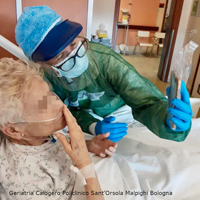
Since the outbreak of coronavirus disease- 19 (COVID-19) pandemic, geriatric population has been the most affected due to the peculiarities of the disease in terms of contagiousness and severity. Major changes have been implemented in healthcare structures and facilities worldwide in order to accomplish the necessity to host and isolate infected patients. Simultaneously, many critical issues have emerged concerning medical and nursing assistance to elderly patients, due to the new arrangement of wards and innovative work tools. Acute Geriatric Units dedicated to COVID-19 have been asked to put giant efforts in adapting to new care models in mobility, communication, feeding, basic assistance and caregivers’ involvement. The purpose of this dissertation is to highlight the role of Geriatricians as proactive contributors of new approaches to elderly patients in times of COVID-19, in order to develop a further-thinking working methodology.
Downloads
How to Cite
PAGEPress has chosen to apply the Creative Commons Attribution NonCommercial 4.0 International License (CC BY-NC 4.0) to all manuscripts to be published.