 https://doi.org/10.4081/ecj.2026.15932
03 | Simulation learning process for medical students: quality evaluation study
All claims expressed in this article are solely those of the authors and do not necessarily represent those of their affiliated organizations, or those of the publisher, the editors and the reviewers. Any product that may be evaluated in this article or claim that may be made by its manufacturer is not guaranteed or endorsed by the publisher.
Published: 15 July 2026
Background. Simulation-based learning is an effective strategy for developing technical, decision-making, and communication skills in clinical contexts [1,2]. A simulation course was recently introduced at the University of Salento for medical and nursing students. It aimed to foster both soft and hard skills through low-fidelity mannequin scenarios. At the end of the course, a questionnaire was administered to assess perceived educational effectiveness, professional relevance, and course organization.
Methods. The overall sample includes 260 students (80 medical, 180 nursing). This report presents preliminary findings from 180 nursing students. The questionnaire, comprising closed and open-ended questions, explored perceived usefulness, learning ease, clarity of objectives, instructor preparation, professional applicability, and personal impact. Data were collected anonymously and analyzed using percentage frequencies.
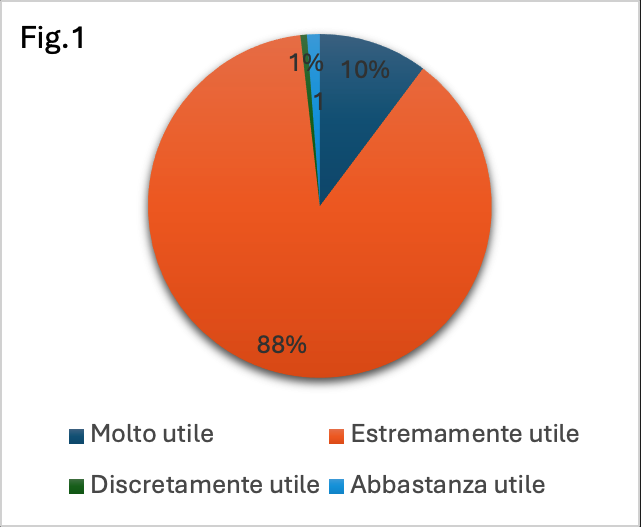
Results. As shown in Figure 1, 88% of students considered the course “extremely useful” for improving clinical skills; 12% rated it as “very useful.” Additionally, 72% found mannequin-based sessions “extremely useful.” For learning purposes, 88% judged the simulation course “very useful,” and 13% “useful.”
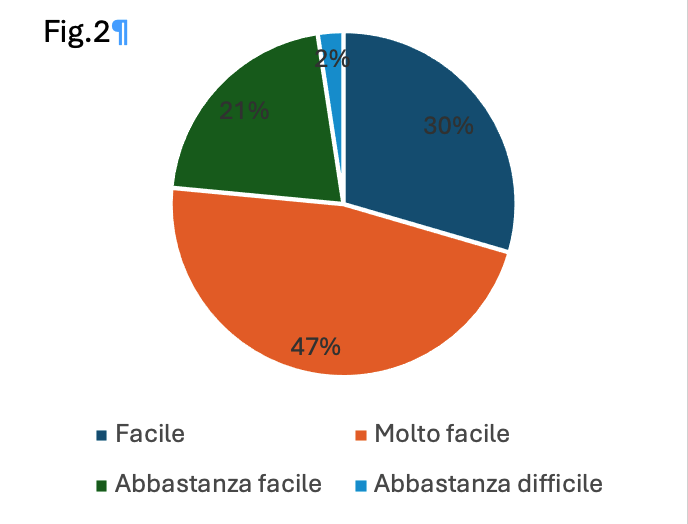
Regarding ease of learning (Figure 2) 47% found the topics “very easy,” 30% “easy,” and 21% “fairly easy” with the adopted methodology. Educational objectives were considered “very clear” by 96% of participants, and 100% acknowledged a high level of instructor preparation. Overall, 62% reported that the course exceeded their expectations.
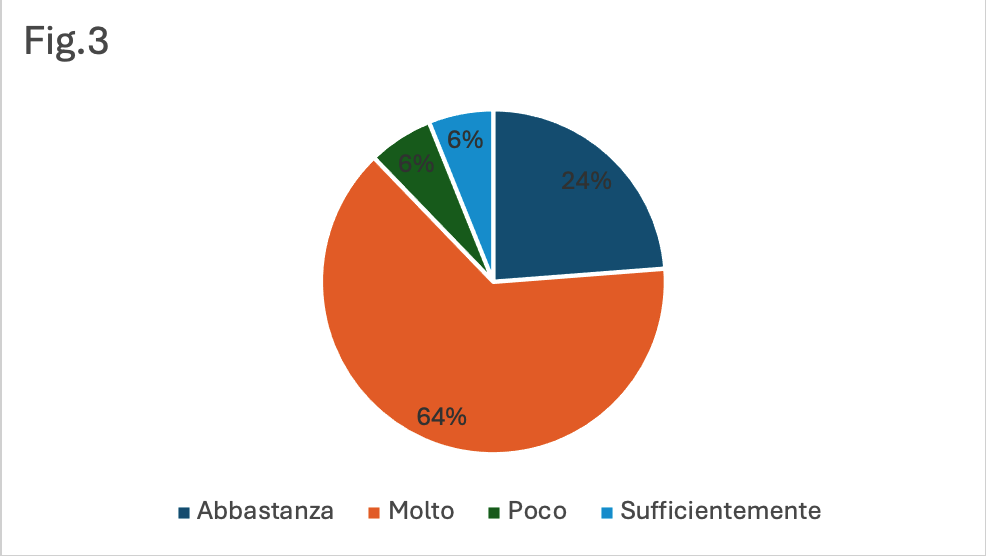
For life-saving technique acquisition, 47% rated it “very easy,” 30% “easy,” and 21% “fairly easy,” indicating the effectiveness of active learning methods. Regarding clinical relevance, 95% rated the course as “very important.” In terms of personal development, 64% reported a “very” positive impact, while 30% rated it “quite positive.”
Open-ended responses revealed strong interest in further training on pediatric/neonatal resuscitation and electrocardiogram interpretation. Students also suggested increasing simulation sessions and adopting peer learning methodologies.
Conclusions. The questionnaire confirmed high student satisfaction and perceived instructional effectiveness. These findings support the integration of simulation-based learning as a core component of healthcare education, emphasizing its practical, realistic approach as essential for meaningful, hands-on learning.
Downloads
-
CRediT authorship contribution
Supporting Agencies
Data Availability Statement
How to Cite

This work is licensed under a Creative Commons Attribution-NonCommercial 4.0 International License.
PAGEPress has chosen to apply the Creative Commons Attribution NonCommercial 4.0 International License (CC BY-NC 4.0) to all manuscripts to be published.